 Get PawLine
Backyard Goat and Sheep
All guidesNew arrivals need a plan before the gate opens
PawLine editorial · Published October 20, 2026
Keep new and returning animals separate under a veterinarian-agreed plan rather than introducing them immediately.
What to know
Penn State's introductory guide recommends quarantine for new and returning animals and changing contaminated shoes or clothing after contact with other herds. Ask your veterinarian how to implement separation and monitoring for your property.
Prepare the area, equipment and caretaker before arrival. Keep the source history and arrival observations in one record. A friendly animal or a normal-looking coat does not prove absence of disease. End the plan according to professional advice, not because the separation area is inconvenient.
Keep this plan with your animal’s notes in PawLine. Get it for iOS · Get it for Android ·
Make the next step clear
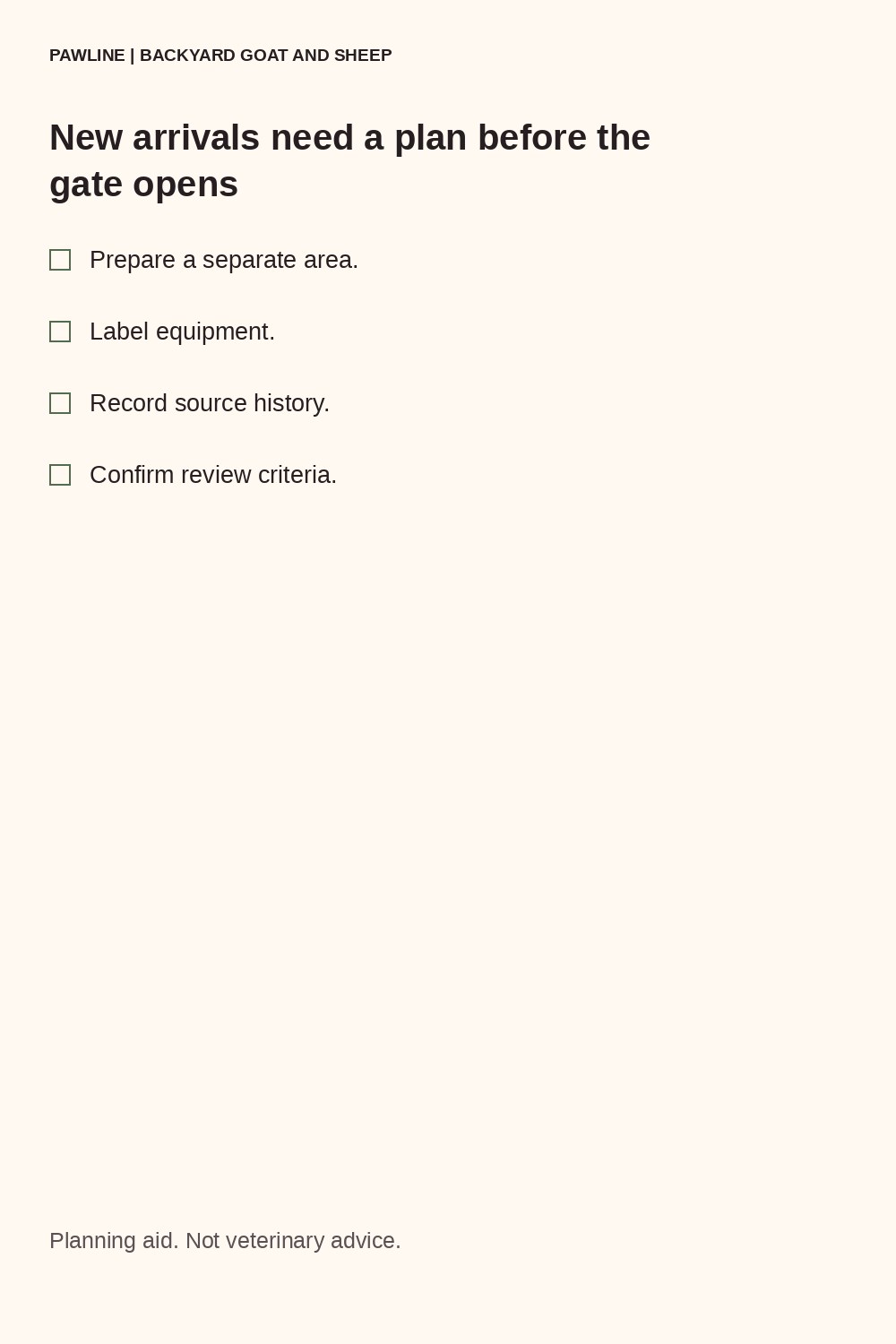
- 1Prepare a separate area.
- 2Label equipment.
- 3Record source history.
- 4Confirm review criteria.
Printable planning sheet
Print this page or copy these labels into your own notebook. These are blank prompts, not data-entry fields. Nothing is saved or sent.
Related guides
Before the first animal comes home
Check the water system, not just the bucket
Keep feed out of the dirty traffic
A pasture note with a useful memory
Walk the boundary with a repair list
Sources and method
Original planning worksheets informed by the sources above. No clinical review has been completed. Sources checked October 19, 2026. General guidance may not fit your animal or local rules.
Get PawLineQuestions before you use this guide
What should I prepare first?
Keep new and returning animals separate under a veterinarian-agreed plan rather than introducing them immediately.
Does this guide replace veterinary advice?
No. It is an educational planning aid, not diagnosis, dosing or treatment. It has not yet been individually reviewed by a licensed veterinarian. Talk to your veterinarian about your animal and do not wait for an app response in an emergency.
Open the printable checklist card
Editorial team · Published October 20, 2026