 Get PawLine
Backyard Goat and Sheep
All guidesWalk the boundary with a repair list
PawLine editorial · Published October 20, 2026
A boundary check should produce specific repair tasks, not a vague statement that the fence looks fine.
What to know
Penn State describes perimeter fencing as a way to contain livestock and exclude predators. Suitable systems depend on the property and species. Ask an experienced adviser to evaluate the setup rather than assuming one fence design suits every situation.
Mark defects by location so a helper can find them. Record gates, water access and areas that need closer attention. If a defect creates immediate risk, secure the animals and arrange help instead of waiting for a weekly repair day. This sheet records the inspection; it does not certify a fence as safe.
Penn State names two common perimeter systems: high-tensile fencing with some wires electrified, and woven wire. Knowing which type you have - and where any subdivision fencing begins - makes a defect description precise enough for a repair person to act on.
A real PawLine answer for a goat property's fence and seasonal review
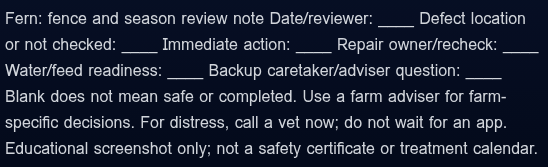
Fern is a fictional healthy adult goat. We asked for a blank property-boundary and seasonal-readiness note, not a safety certificate, inspection result or treatment calendar. This actual app answer was captured October 24, 2026. No animal profile was created and no inspection, repair or completed care is claimed.
Give each defect a location, owner and recheck
- Identify the boundary section or gate, date and reviewer. Record the fence type and a location a helper can find. Penn State describes perimeter fencing for containment and predator exclusion, with high-tensile and woven-wire examples. It does not certify any fence on your property or make one design suitable for every goat.
- Write the actual defect or "not checked" rather than turning a blank into "safe." Describe what you saw without assigning a safety score. If there is an immediate containment risk, protect the animals and arrange competent help instead of leaving the problem on a later repair list. Do not attempt unfamiliar electrical or structural work from an app answer.
- Separate the immediate action, repair owner and recheck. A planned repair is not a completed repair; record what was actually done and who checked it afterward. Seek an experienced adviser for the property's fence design, predator risks and unresolved defects.
- At a seasonal change, review water availability and working equipment, feed access and storage, and caretaker cover. Penn State identifies feeders and water systems as basic equipment and says water should be fresh, clean and available. Its water-system examples include freeze protection. Check the actual setup rather than assuming a connected hose or powered heater is working.
- Give each seasonal task a person and review date, and keep a backup caregiver's instructions available. Ask qualified advisers about changes to nutrition or health planning. This original planning workflow supplies no universal stocking rate, electrical specification, medical date or treatment schedule.
- Keep animal observations distinct from property tasks. Fern's fictional healthy description does not establish any real animal's condition. If an animal is distressed, call your veterinarian or emergency veterinary service first, then document what was observed and the instructions received.
Use your own dated notes and share relevant tasks manually with the next helper. The screenshot is a conversation, not a property inspection system, repair tracker, reminder setup or remote animal monitor. Nothing from this website transfers to PawLine automatically. Use the seasonal review guide to walk the wider setup without treating the list as a safety clearance.
Source context: Penn State's sheep and goat guide, checked October 24, 2026, supports fencing, equipment and water context. The owner/recheck and caretaker prompts are our organizational aid, not a validated inspection method or veterinarian-reviewed protocol. The source does not review this app answer or endorse PawLine.
Keep this plan with your animal’s notes in PawLine. Get it for iOS · Get it for Android ·
Make the next step clear
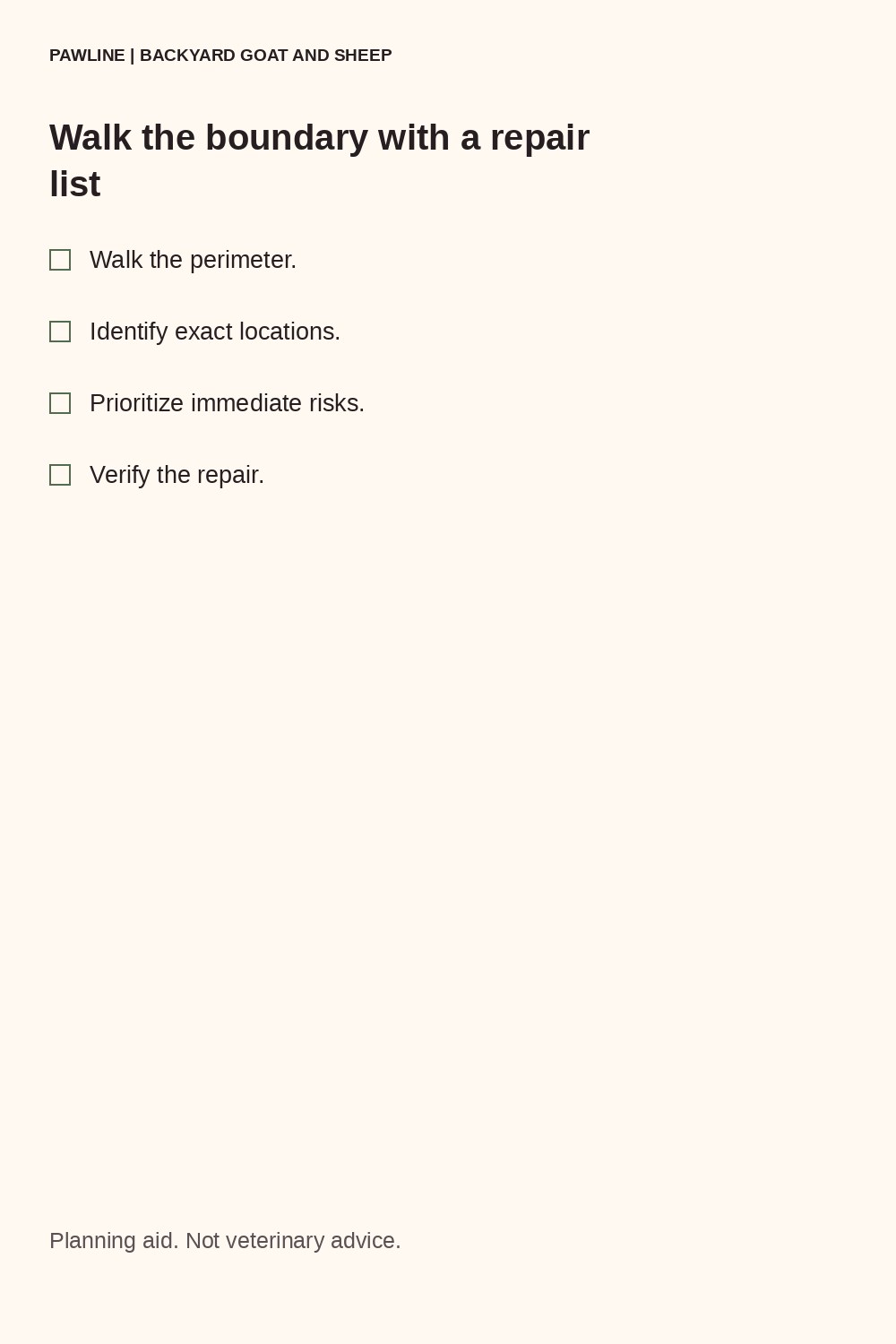
- 1Walk the perimeter.
- 2Identify exact locations.
- 3Prioritize immediate risks.
- 4Verify the repair.
Printable planning sheet
Print this page or copy these labels into your own notebook. These are blank prompts, not data-entry fields. Nothing is saved or sent.
Related guides
Before the first animal comes home
Check the water system, not just the bucket
Keep feed out of the dirty traffic
A pasture note with a useful memory
New arrivals need a plan before the gate opens
Sources and method
Original planning worksheets informed by the sources above. No clinical review has been completed. Penn State sheep-or-goats page checked October 23, 2026; livestock planning page checked October 19, 2026. General guidance may not fit your animal or local rules.
Get PawLineQuestions before you use this guide
What should I prepare first?
A boundary check should produce specific repair tasks, not a vague statement that the fence looks fine.
Does this guide replace veterinary advice?
No. It is an educational planning aid, not diagnosis, dosing or treatment. It has not yet been individually reviewed by a licensed veterinarian. Talk to your veterinarian about your animal and do not wait for an app response in an emergency.
Open the printable checklist card
Editorial team · Published October 20, 2026