 Get PawLine
Backyard Goat and Sheep
All guidesBefore the first animal comes home
PawLine editorial · Published October 20, 2026
Plan facilities, care contacts and running costs before selecting an animal. A small herd still needs a workable daily system.
What to know
Penn State recommends choosing animals and equipment to fit the operation. Feeders, water systems and handling equipment should be planned before arrival. Ask how your land, time and experience fit the animals you intend to keep.
Record the seller's answers about identity and history, but distinguish a claim from a veterinary finding. Arrange professional advice for health and arrival planning. This original checklist is not a buying recommendation or an animal health guarantee. Avoid letting an attractive sale price decide the whole project. Penn State's livestock guidance also recommends, where possible, testing newly purchased animals two to four weeks before transport to their new home, as part of basic biosecurity; ask the seller what testing has been done and arrange any remaining tests before the animal travels.
Keep this plan with your animal’s notes in PawLine. Get it for iOS · Get it for Android ·
Make the next step clear
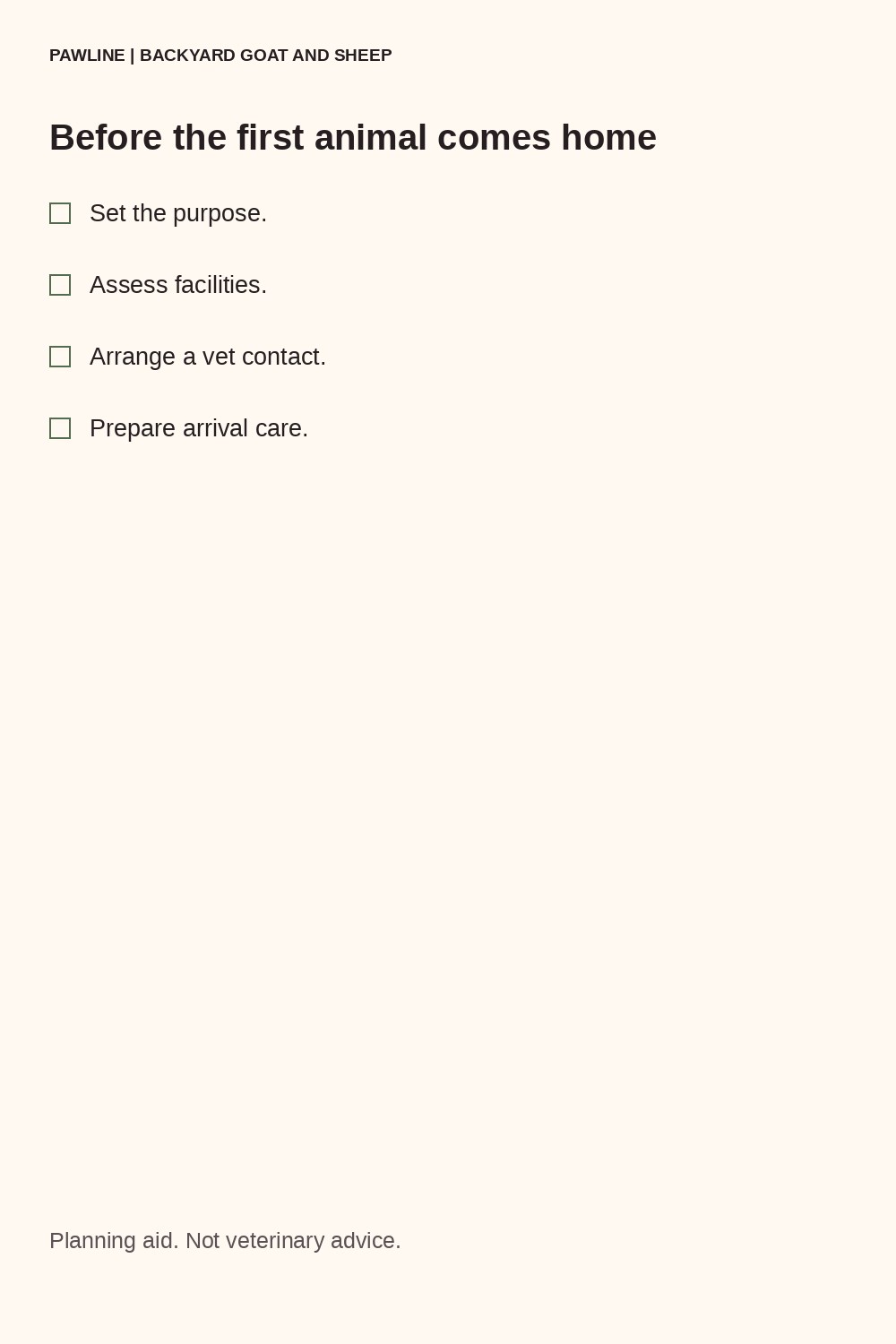
- 1Set the purpose.
- 2Assess facilities.
- 3Arrange a vet contact.
- 4Prepare arrival care.
Printable planning sheet
Print this page or copy these labels into your own notebook. These are blank prompts, not data-entry fields. Nothing is saved or sent.
Related guides
Check the water system, not just the bucket
Keep feed out of the dirty traffic
A pasture note with a useful memory
New arrivals need a plan before the gate opens
Walk the boundary with a repair list
Sources and method
Original planning worksheets informed by the sources above. No clinical review has been completed. Penn State sheep-and-goat and livestock-planning pages checked October 23, 2026; livestock-planning page checked again October 24, 2026. General guidance may not fit your animal or local rules.
Get PawLineLeer esta guía en español (traducción sin revisión veterinaria)
A real PawLine answer before buying goats
We asked PawLine about a fictional beginner planning to buy two healthy adult goats next month. No saved animal was selected. This actual app response was captured October 24, 2026. It is an educational demo, not a customer story or a veterinary assessment.
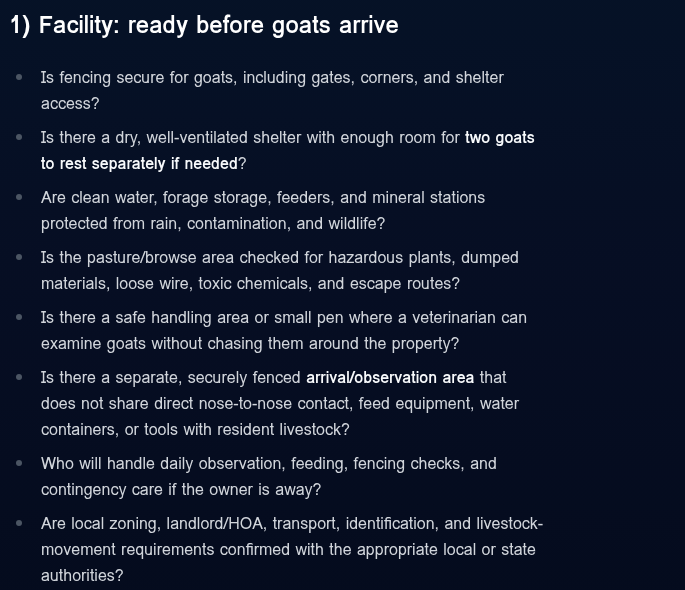
The response asks whether facilities and daily care are ready before purchase, then covers seller records, a goat-capable veterinarian and separate-arrival logistics. The veterinarian sets testing, biosecurity and release criteria. If a goat becomes acutely unwell, call a veterinarian promptly rather than waiting for an app answer.
Our Wisconsin Extension new-arrival source supports preparing separation, animal records and dedicated equipment before bringing animals home. It does not certify this individual app answer or endorse PawLine. The response has not been individually reviewed by a veterinarian.
Explore PawLine for iOS and Android. Check your store listing for current features and offers. Nothing from this page transfers into the app automatically.
Questions before you use this guide
What should I prepare first?
Plan facilities, care contacts and running costs before selecting an animal. A small herd still needs a workable daily system.
Does this guide replace veterinary advice?
No. It is an educational planning aid, not diagnosis, dosing or treatment. It has not yet been individually reviewed by a licensed veterinarian. Talk to your veterinarian about your animal and do not wait for an app response in an emergency.
Open the printable checklist card
Editorial team · Published October 20, 2026