 Get PawLine
Backyard Goat and Sheep
All guidesKeep feed out of the dirty traffic
PawLine editorial · Published October 20, 2026
Choose and maintain feeders that reduce ground feeding and waste. Keep manure-covered footwear away from feed surfaces.
What to know
Penn State explains that ground feeding can contribute to health problems, particularly parasite exposure. It also warns against contaminating walk-through feeders with dirty footwear. A feeder design only helps when the daily routine supports it.
Walk the route from storage to feeding place. Note where feed spills, where animals crowd and whether cleaning is practical. Diet formulation and species-specific mineral choices require qualified advice; this page does not turn a feeder checklist into a ration. Save professional instructions in their original form.
Penn State’s reasoning is direct: sheep and goats that forage feed off the ground are more likely to develop health problems, particularly parasite infections, so feeders exist to keep feed off the ground. Well-designed feeders also cut waste by catching what animals spill - a feeder that spills feed onto the ground is doing half its job.
Keep this plan with your animal’s notes in PawLine. Get it for iOS · Get it for Android ·
Make the next step clear
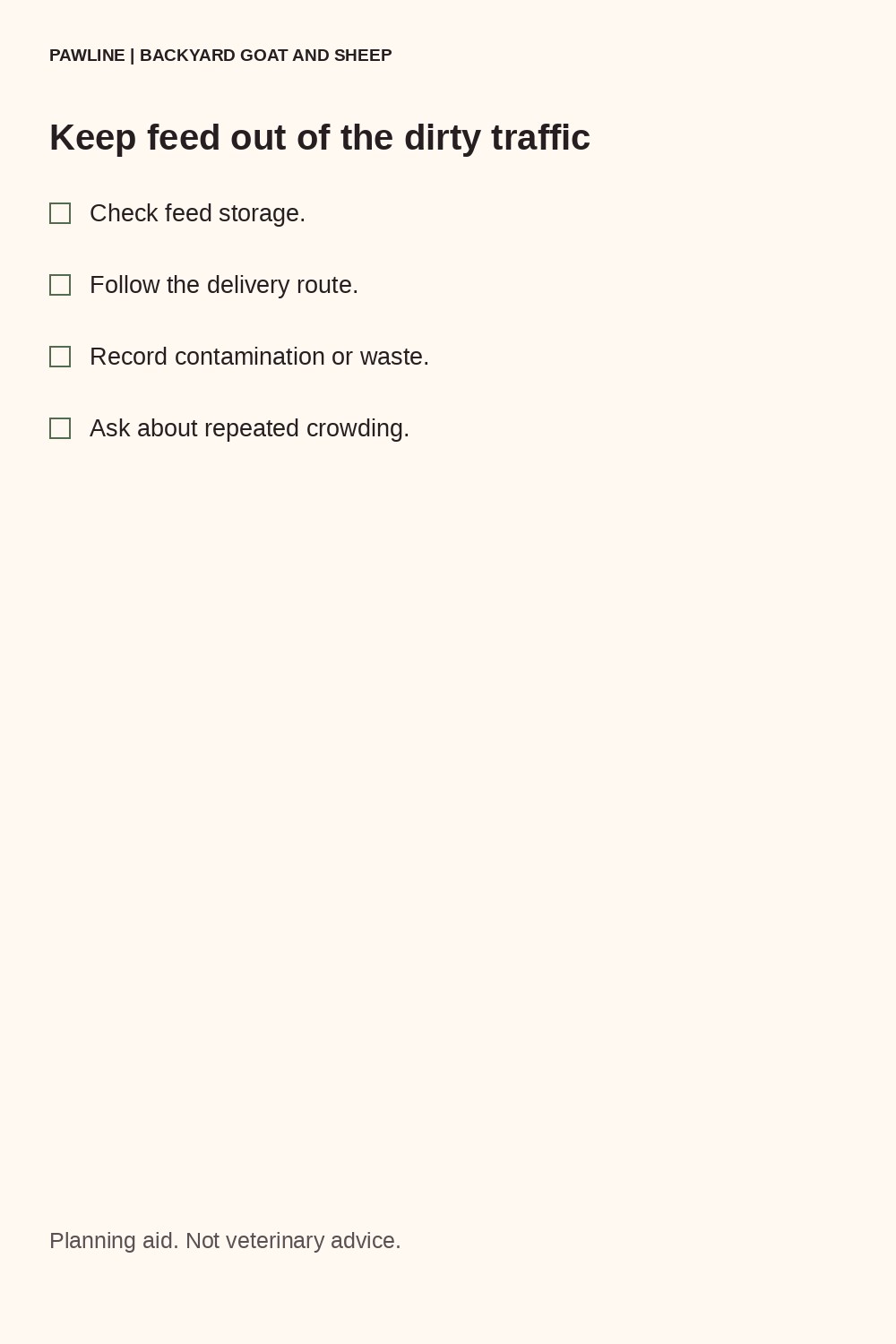
- 1Check feed storage.
- 2Follow the delivery route.
- 3Record contamination or waste.
- 4Ask about repeated crowding.
Printable planning sheet
Print this page or copy these labels into your own notebook. These are blank prompts, not data-entry fields. Nothing is saved or sent.
Related guides
Before the first animal comes home
Check the water system, not just the bucket
A pasture note with a useful memory
New arrivals need a plan before the gate opens
Walk the boundary with a repair list
Sources and method
Original planning worksheets informed by the sources above. No clinical review has been completed. Sources checked October 23, 2026. General guidance may not fit your animal or local rules.
Get PawLineA real PawLine answer about daily feed, water and grazing notes
We asked PawLine what a beginner caring for two fictional healthy adult goats could record before a routine veterinary visit. No saved animal was selected. This actual English-language app response was captured October 24, 2026. It is an educational demo, not a customer story or a veterinary assessment.
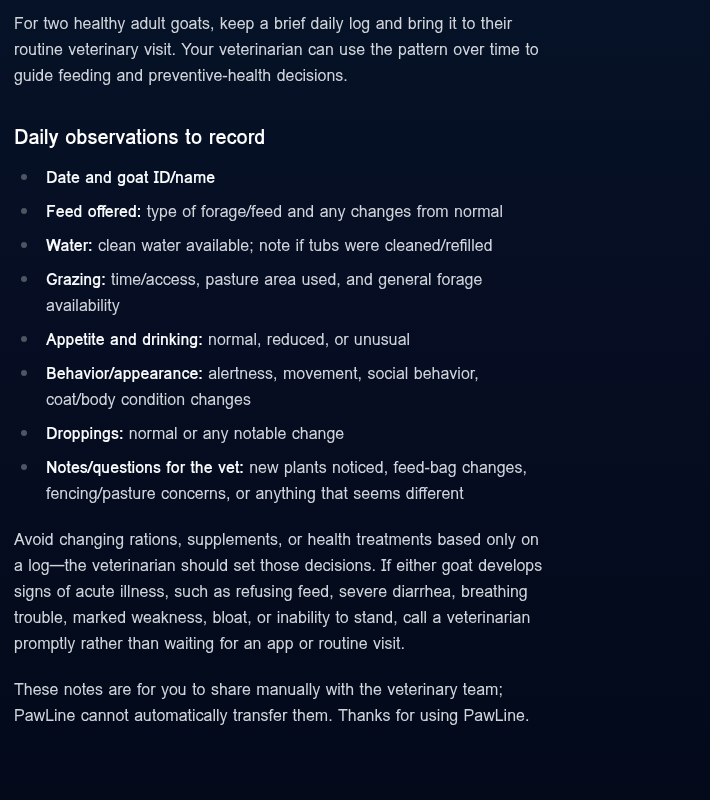
The answer suggests a brief dated note for each goat: feed offered and changes, clean-water access and tub cleaning, grazing area and forage availability, appetite, drinking, behavior and droppings. These are ordinary observations, not a ration calculation, pasture-safety clearance or treatment plan. Your veterinarian should make animal-specific feeding and health decisions.
Penn State Extension explains why these topics matter: nutritional needs change with life stage and production, water should be fresh, clean and available, and pasture management affects forage and parasite exposure. Its sheep and goat management guide was checked October 24, 2026. It does not certify this individual app answer or endorse PawLine. The response has not been individually reviewed by a veterinarian.
Pair these notes with the water-system guide and pasture guide. Share notes manually with your veterinary team; this page does not transfer anything into PawLine, and the app answer says it cannot automatically transfer the notes to the veterinarian. If either goat is acutely unwell, call a veterinarian promptly rather than waiting for an app or routine visit.
Explore PawLine for iOS and Android. Check your store listing for current features and offers.
Questions before you use this guide
What should I prepare first?
Choose and maintain feeders that reduce ground feeding and waste. Keep manure-covered footwear away from feed surfaces.
Does this guide replace veterinary advice?
No. It is an educational planning aid, not diagnosis, dosing or treatment. It has not yet been individually reviewed by a licensed veterinarian. Talk to your veterinarian about your animal and do not wait for an app response in an emergency.
Open the printable checklist card
Editorial team · Published October 20, 2026