 Get PawLine
Backyard Goat and Sheep
All guidesKeep individual history inside the herd picture
PawLine editorial · Published October 20, 2026
Use animal identifiers and dates so group observations do not erase individual changes.
What to know
A note saying the herd ate normally may miss one animal that stayed away. Record which animal you saw and which observations apply to the group. Penn State emphasizes biosecurity and veterinary planning as part of starting a flock or herd.
Keep births, arrivals, departures and professional visits in a dated index. A record is not permission to perform a procedure or choose medication. Save clinician instructions separately and identify who is responsible for follow-up. When a concern is urgent, call rather than spending time perfecting the log.
A real PawLine answer for an individual lamb's life-stage record
Iris is a fictional healthy lamb. We asked for a blank individual history note, not a weaning decision or a treatment plan. This actual app answer was captured October 24, 2026. No animal profile was created and no birth date, feeding observation, arrival, visit or completed follow-up is claimed.
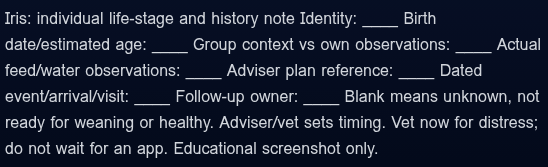
Keep the individual's history visible
- Start with a stable animal identifier and a known birth date or clearly marked estimated age. Do not invent a date to complete the page. Link dated arrivals, departures and professional visits to the right animal instead of using a herd-wide statement as its personal history.
- Separate group context from Iris's own observed behavior and feed or water use. "The group ate" does not establish what one lamb consumed. Write what was actually seen, who saw it and when; mark an unobserved item "not checked" rather than treating a blank as normal.
- Keep the original adviser or veterinarian plan reference nearby. Penn State's weaning guide describes different production systems and preparation for solid feed and drinking water. It does not make one age, a completed note or the presence of a feeder proof that an individual is ready for separation.
- Ask the veterinarian or experienced adviser to set the timing, preparation and follow-up for your animals. This example gives no weaning age, ration, water restriction, drug, dose or vaccination schedule. Do not copy a procedure from another flock into this history as a personal care plan.
- Record an event only when it happened. A proposed visit or transition belongs in planning notes, not completed history. Name who will follow up and what question remains, then add the actual response with its date without overwriting the original record.
- Continue individual observation through a transition. Penn State advises watching for health problems after weaning. A history note cannot diagnose those problems or establish safety; contact your veterinarian for illness or concerns, and call now for distress before completing records or waiting for an app answer.
Use your own dated notes and share relevant information manually with your veterinary team or the next caregiver. The screenshot is an app conversation, not a saved animal profile, automated herd-history register, readiness assessment, reminder setup or clinical monitoring screen. Nothing from this website transfers to PawLine automatically.
Source context: Penn State Extension's weaning guide, checked October 24, 2026 for this example, supports the preparation and observation context in its stated sheep-management setting. Our blank identity/event/follow-up workflow is an original organizational aid, not a validated clinical tool or veterinarian-reviewed protocol. The source does not review this app answer or endorse PawLine; this date does not refresh the other sources on this page.
Keep this plan with your animal’s notes in PawLine. Get it for iOS · Get it for Android ·
Track the change from nursing lamb to weaned youngster
Weaning is a life-stage transition, not just a date to copy from another flock. Penn State Extension describes different weaning systems and stresses preparing lambs for solid feed and drinking water before separation. The suitable plan depends on the animals and the production system.
For each lamb, keep the birth date or estimated age, identification, current feeding arrangement and the veterinarian or experienced adviser's transition plan together. Record what is known about eating and drinking, not a guess that every animal of the same age is ready.
Agree the timing, preparation and follow-up before changing the routine. Keep health procedures in a veterinarian-directed plan; this record does not prescribe weaning age, rations, water restriction or medication. Observe each animal through the transition and contact your veterinarian about illness or distress.
Penn State Extension: Weaning practices limit stress to ewes and lambs · Checked October 24, 2026 for this added section. This does not re-date the other sources on the page.
Make the next step clear
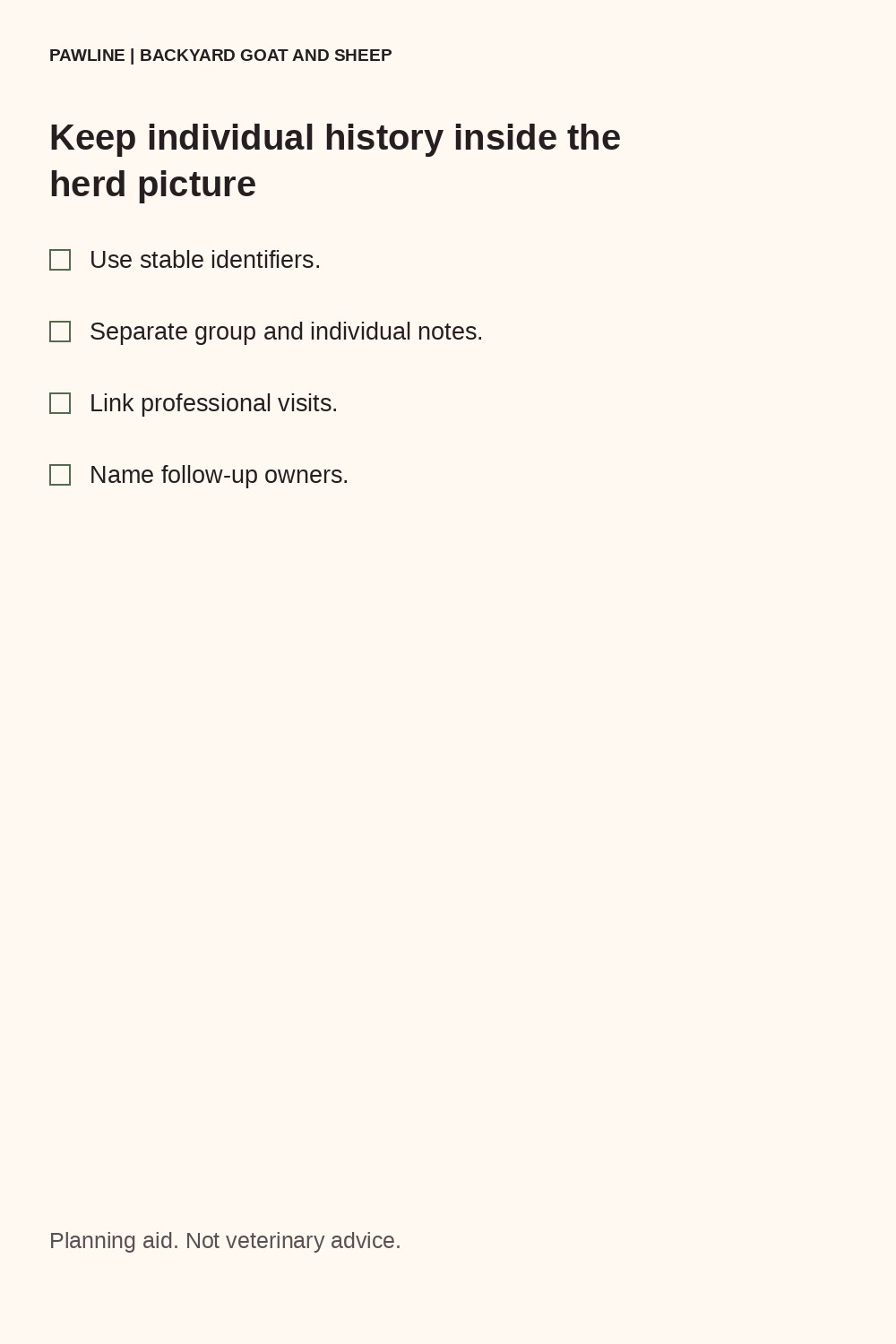
- 1Use stable identifiers.
- 2Separate group and individual notes.
- 3Link professional visits.
- 4Name follow-up owners.
Printable planning sheet
Print this page or copy these labels into your own notebook. These are blank prompts, not data-entry fields. Nothing is saved or sent.
Related guides
Before the first animal comes home
Check the water system, not just the bucket
Keep feed out of the dirty traffic
A pasture note with a useful memory
New arrivals need a plan before the gate opens
Sources and method
Original planning worksheets informed by the sources above. No clinical review has been completed. Sources checked October 19, 2026. General guidance may not fit your animal or local rules.
Get PawLineQuestions before you use this guide
What should I prepare first?
Use animal identifiers and dates so group observations do not erase individual changes.
Does this guide replace veterinary advice?
No. It is an educational planning aid, not diagnosis, dosing or treatment. It has not yet been individually reviewed by a licensed veterinarian. Talk to your veterinarian about your animal and do not wait for an app response in an emergency.
Open the printable checklist card
Editorial team · Published October 20, 2026